Starting with the release of macOS Lion in 2011, Macs have offered a Recovery. Download Mac Lion Installer from App Store. Latest versions of Mac are only available through App.
| Developer(s) | Apple |
|---|---|
| Initial release | January 5, 1999 |
| Operating system | macOS Mac OS 9 Mac OS 8 |
| License | proprietary |
| Website | apple.com |
NetBoot was a technology from Apple which enabled Macs with capable firmware (i.e. New World ROM) to boot from a network, rather than a local hard disk or optical disc drive. NetBoot is a derived work from the Bootstrap Protocol (BOOTP), and is similar in concept to the Preboot Execution Environment. The technology was announced as a part of the original version of Mac OS X Server at Macworld Expo on 5 January 1999.[1] NetBoot has continued to be a core systems management technology for Apple,[2] and has been adapted to support modern Mac Intel machines. NetBoot, USB, and FireWire are some of the external volume options for Mac OS re-install.
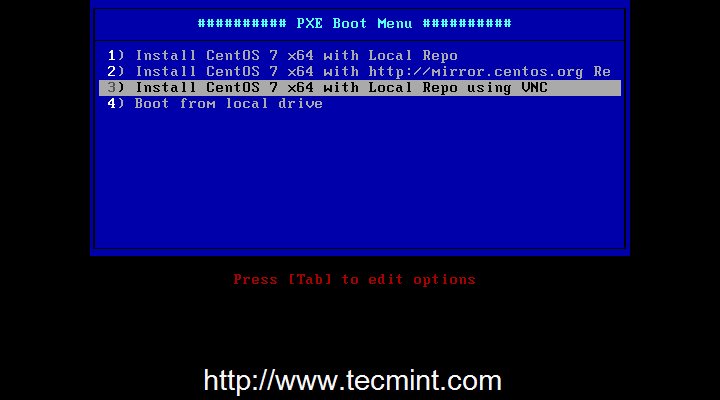
Process[edit]
A disk image with a copy of macOS, macOS Server, Mac OS 9, or Mac OS 8 is created using System Image Utility and is stored on a server, typically macOS Server. Clients receive this image across a network using many popular protocols including: HTTPS, AFP, TFTP, NFS, and multicastApple Software Restore (ASR). Server-side NetBoot image can boot entire machines, although NetBoot is more commonly used for operating system and software deployment, somewhat similar to Norton Ghost.
To NetBoot a client machine, hold the 'N' key as the Mac boots, or select the NetBoot server using the Startup Disk preference pane (macOS) or control panel (Mac OS 8 and 9). Alternatively, New World Macs can be started with the Command (⌘), Option (⌥), O and F keys pressed to enter the Open Firmware prompt. Once in the Open Firmware one can tell the client to attempt the NetBoot procedure by entering 'boot enet:0' and pressing the return key.
Client machines first request network configuration information through DHCP, then a list of boot images and servers with BSDP and then proceed to download images with protocols mentioned above.
Both Intel and PowerPC-based servers can serve images for Intel and PowerPC-based clients.
NetInstall[edit]
NetInstall is a similar feature of macOS Server which utilizes NetBoot and ASR to deliver installation images to network clients (typically on first boot). Like NetBoot, NetInstall images can be created using the System Image Utility. NetInstall performs a function for macOS similar to Windows Deployment Services for Microsoft clients, which depend on the Preboot Execution Environment.
Legacy[edit]
Boot Mac Into Terminal
Mac OS 8.5 and Mac OS 9 use only BOOTP/DHCP to get IP information, followed by a TFTP transfer of the Mac OS ROM file. Next, two volumes are mounted via AppleTalk over TCP on which the client disk images reside. All in all, the Classic Mac OS uses three images; a System image which contains the operating system and may contain applications. Next a private image (or scratch disk) is mounted in an overlay over the read-only System image. Finally, an applications image is mounted. This image, however, may be empty.
See also[edit]
References[edit]

- ^'Apple Announces Mac OS X Server'. Apple, Inc. 1999-01-05. Retrieved 2010-08-12.
NetBoot, a new feature which allows a network of Macs to be booted and configured from a single server
- ^Ryan Faas (2007-09-11). 'Hands on: Configuring Apple's NetBoot service'. Computerworld. Retrieved 2010-08-12.
Apple's NetBoot technology has been a staple part of Mac OS X Server since the latter's original release.
External links[edit]
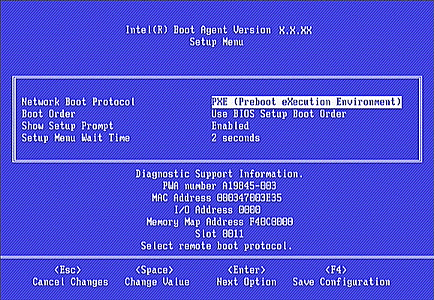
To use any of these key combinations, press and hold the keys immediately after pressing the power button to turn on your Mac, or after your Mac begins to restart. Keep holding until the described behavior occurs.
- Command (⌘)-R: Start up from the built-in macOS Recovery system. Or use Option-Command-R or Shift-Option-Command-R to start up from macOS Recovery over the Internet. macOS Recovery installs different versions of macOS, depending on the key combination you use while starting up. If your Mac is using a firmware password, you're prompted to enter the password.
- Option (⌥) or Alt: Start up to Startup Manager, which allows you to choose other available startup disks or volumes. If your Mac is using a firmware password, you're prompted to enter the password.
- Option-Command-P-R:Reset NVRAM or PRAM. If your Mac is using a firmware password, it ignores this key combination or starts up from macOS Recovery.
- Shift (⇧): Start up in safe mode. Disabled when using a firmware password.
- D: Start up to the Apple Diagnostics utility. Or use Option-Dto start up to this utility over the Internet. Disabled when using a firmware password.
- N: Start up from a NetBoot server, if your Mac supports network startup volumes. To use the default boot image on the server, hold down Option-N instead. Disabled when using a firmware password.
- Command-S: Start up in single-user mode. Disabled in macOS Mojave or later, or when using a firmware password.
- T: Start up in target disk mode. Disabled when using a firmware password.
- Command-V: Start up in verbose mode. Disabled when using a firmware password.
- Eject (⏏) or F12 or mouse button or trackpad button: Eject removable media, such as an optical disc. Disabled when using a firmware password.
If a key combination doesn't work
If a key combination doesn't work at startup, one of these these solutions might help:
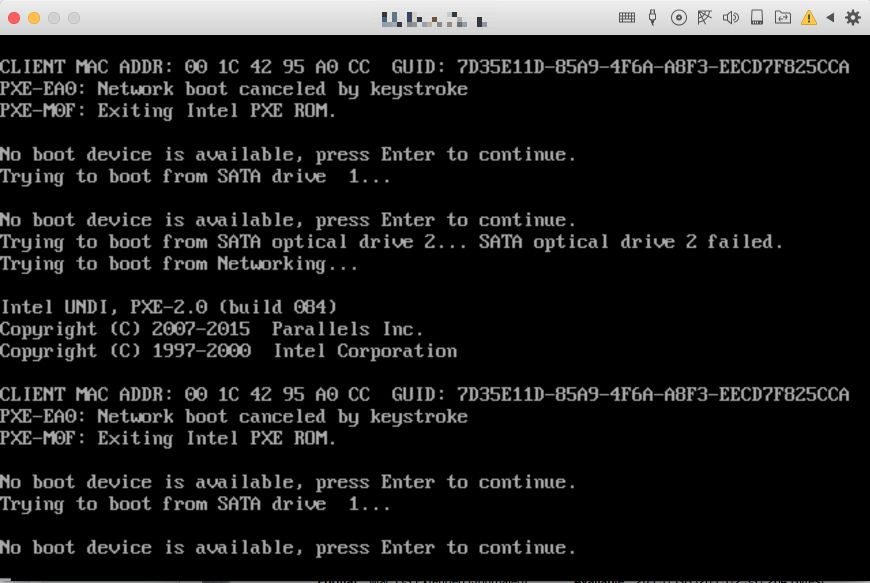
- Be sure to press and hold all keys in the combination together, not one at a time.
- Shut down your Mac. Then press the power button to turn on your Mac. Then press and hold the keys as your Mac starts up.
- Wait a few seconds before pressing the keys, to give your Mac more time to recognize the keyboard as it starts up. Some keyboards have a light that flashes briefly at startup, indicating that the keyboard is recognized and ready for use.
- If you're using a wireless keyboard, plug it into your Mac, if possible. Or use your built-in keyboard or a wired keyboard. If you're using a keyboard made for a PC, such as a keyboard with a Windows logo, try a keyboard made for Mac.
- If you're using Boot Camp to start up from Microsoft Windows, set Startup Disk preferences to start up from macOS instead. Then shut down or restart and try again.
Network Boot For Macbook Pro
Remember that some key combinations are disabled when your Mac is using a firmware password.
Network Boot For Mac Os

Learn more
- Learn what to do if your Mac doesn't turn on.
- Learn about Mac keyboard shortcuts that you can use after your Mac has started up.