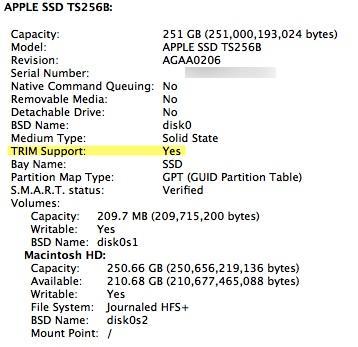
Back Up Your Mac Before Enabling the TRIM Command You need to enable trimming manually when installing a third party SSD. All Macs shipped with an SSD have TRIM enabled, however, and yours can be checked by clicking on the Apple logo About This Mac System Report SATA/SATA Express and look for “Trim Support”.
- The Mac angle is not obvious in the G-Drive Mobile SSD's design, though. A big silver G on the front and hints of bright blue under a faux grille make this drive look more like a movie prop than a.
- 4TB SSD Kit for Mac Pro - Next Gallery Image; 4TB SSD Kit for Mac Pro. $1,600.00 All Colors. 8TB SSD Kit for Mac Pro - Previous Gallery Image; 8TB SSD Kit for Mac Pro - Next Gallery Image; 8TB SSD Kit for Mac Pro. $2,800.00 All Colors ††.
- Enhance performance and longevity with the flip of a switch. Every time your SSD is writing new data, it must perform time-consuming cleaning and maintenance of data blocks. By enabling Trim, the SSD data blocks are cleaned and maintained preemptively using our custom Trim driver. This leads to fewer operations during the writing process, unlocking the maximum performance potential of your SSD.
The best way to expand your Mac’s lifespan and obtain a significant speed boost is by replacing the hard drive with a solid state drive (SSD). You’ll notice the huge performance improvement right from the first time you boot up and immediately praise yourself for making this investment. However, you shouldn’t stop at installing a new SSD. There is one tiny command line you must type into Terminal to enable a feature meant to expand the lifespan of the newly installed drive; this feature is called TRIM.
What Is TRIM, and Why Do You Need It?
Writing to an SSD is totally different than writing to a traditional hard drive: the SSD first clears existing information from the flash memory cells and programs new data into them; hence, the writing process is often referred as program/erase cycles or P/E cycles. There is one thing to note, though, and that is that there are a limited number of P/E cycles an SSD can support. Writing to an SSD is like writing on a piece of paper with a pencil: if you erase the same space too many times, it can wear out. Manufacturers address this issue with so-called wear leveling, which prevents SSD memory cells (the pages) from wearing out.
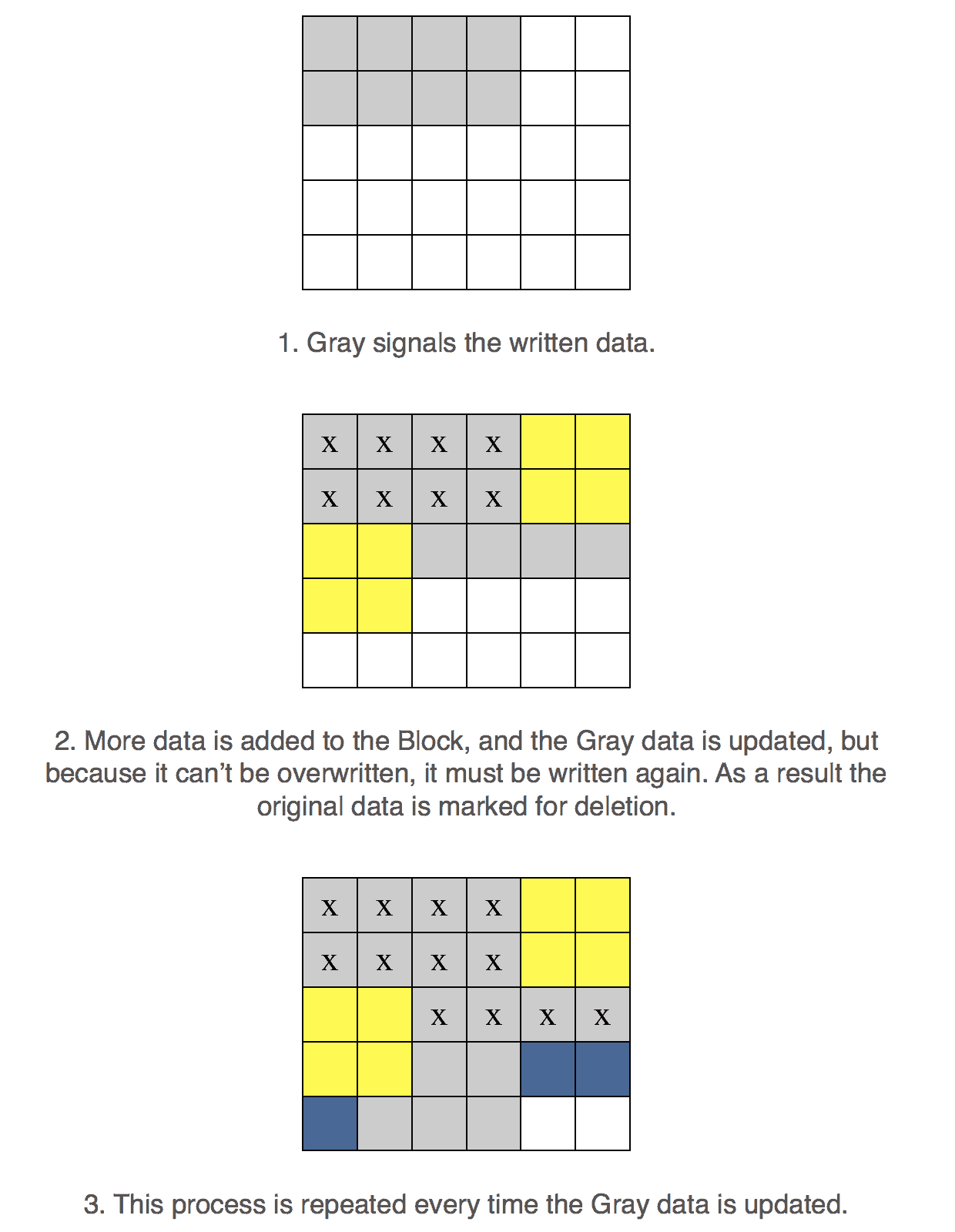
SSDs contain memory cells organized into pages and blocks. What represents a challenge is that with an SSD you can write on a page any time, but you can erase only one block at a time. Each block contains a specified number of pages (from 32 to 256), which contain a specified amount of data (2 to 8KB). Unlike traditional hard drives, data on SSDs can’t be directly overwritten. When data changes, it must be written again. The same data (and metadata) ends up being written over and over again in our daily use of computers generating a phenomenon called write amplification, which uses up the limited P/E cycles.
Download CleanMyMac X from MacPaw’s website and clean up to 500MB of junk data from your computer while enjoying all the features of the software without major limitations.
TRIM can be considered a more efficient way of handling “garbage” and was introduced shortly after SSDs became available. The TRIM command allows the operating system to inform the SSD about regions where the data marked for deletion are stored, and after trimming the SSD won’t preserve the contents of the block when it writes new data to a page. This enables less write amplification and, as it doesn’t use up the precious P/E cycles, the SSD’s lifespan will be much longer.
Back Up Your Mac Before Enabling the TRIM Command
You need to enable trimming manually when installing a third party SSD. All Macs shipped with an SSD have TRIM enabled, however, and yours can be checked by clicking on the Apple logo > About This Mac > System Report > SATA/SATA Express and look for “Trim Support”. Note that this won’t work on Retina MacBook Pro (late 2016) units.
If the answer here is “no” and you are running either macOS El Capitan 10.11.x or macOS Yosemite 10.10.4 or later versions, then TRIM can be enabled with one simple command in Terminal. Earlier versions of macOS don’t support this command, but there are third party apps, such as TRIM Enabler ($14.99), that can enable it.
Before you enable TRIM on the freshly installed SSD, we highly recommend doing a manual backup with Time Machine (or the backup service of your preference). Do not skip this step, because – despite supporting it – Apple doesn’t take any responsibility for data loss during the process. If anything goes wrong, the data will be lost and you won’t be able to recover it, so a backup can save the day.
But you don’t want to fill up your backup drive or the precious space on the SSD with all the junk files generated by apps as you use them: cookies, cache files, duplicates, erroneous downloads, iOS firmware downloads and much more should be wiped. For this reason, we strongly recommend performing a system cleanup using a Mac optimization app such as CleanMyMac, MacBooster or OnyX. After the cleaning process your Mac will be in its best shape for a backup and then to enable TRIM.
How to Enable TRIM on macOS in Five Easy Steps
To expand the lifespan of your SSD, follow the steps below:
- Launch Terminal.
- Type the command sudo trimforce enable, and press enter.
- Type the admin password, and press enter.
- Read the system notice, type “y”, and press enter.
- macOS will require your consent to reboot after finishing the process, so type “y” again, and press enter.
After finishing the process your Mac will reboot with TRIM enabled. Check again if TRIM support is now “OK” by clicking on the Apple logo > About this Mac > System Report > SATA/SATA Express, or by typing the following command in terminal:
system_profiler SPSerialATADataType | grep ‘TRIM’.
Best Mac Optimization Software of 2020
| Rank | Company | Info | Visit |
| |||
| |||
|
Get the Best Deals on Mac Optimization Software
Stay up to date on the latest tech news and discounts on Mac optimization software with our monthly newsletter.
You have to come to your own conclusions. Probaly less important on a brand new SSD, and one that has plenty of free space.
Once you make the choice stick with it; ie you do not want to be flipping back and forth as this will lead to data corruption.
Always advised to have a back up plan in place. How to create a boot clone
TRIM will release deleted blocks, It is recommended once enabled do a restart into SafeBoot Mode (hold the Shift key.)

Safe Mode does a Disk Repair and honors this trimforce command, effectively removing all the old deleted data.
The advantage of the TRIM command is that it enables the SSD’s GC (garbage collection) to skip the invalid data rather than moving it, thus saving time not rewriting the invalid data. This results in a reduction of the number of erase cycles on the flash memory and enables higher performance during writes. The SSD doesn’t need to immediately delete or garbage collect these locations it just marks them as no longer valid. This helps ensure that all storage cells are aged uniformly and maximum lifetime achieved.

Ssd With Trim Support For Mac
ref: http://www.thessdreview.com/daily-news/latest-buzz/garbage-collection-and-trim-i n-ssds-explained-an-ssd-primer/
trimforce status from terminal copy & paste:
Ssd With Trim For Mac Osx
system_profiler SPSerialATADataType | grep 'TRIM'
To move forward:
trimforce enable
trimforce disable
_____________________
All new SSD will perform well, it is over time when allocated blocks and pages become used, you start to see a loss of performance.
'TRIM doesn’t obviate the need for garbage collection—it works with garbage collection to more properly mark pages as stale. And you don’t need TRIM for garbage collection to work—but TRIM makes an SSD’s garbage collection more efficient.'
http://arstechnica.com/gadgets/2015/04/ask-ars-my-ssd-does-garbage-collection-so -i-dont-need-trim-right/
I can say new Apple computers that ship w/ SSD have TRIM enabled by default.
Apple just within the last couple OS X, supply the TRIM command in terminal for 3rd party SSD (eliminating the need for 3rd party methods to enable TRIM) this should tell you something about demand of this functionality.
Enable Trim Ssd Mac
Oct 11, 2018 2:20 PM